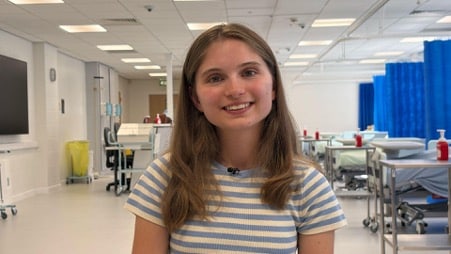
How one teenager overcame the odds to survive one of the rarest childhood cancers and is now helping save the lives of others.
Every child diagnosed with alveolar rhabdomyosarcoma (ARMS) begins a journey no family ever imagines. It is one of the rarest and most aggressive childhood cancers, requiring months of intensive treatment, extraordinary resilience and unwavering hope. While advances in medicine have improved outcomes for some children, those diagnosed with metastatic disease still face significant challenges, making continued research and awareness more important than ever.
Few stories embody that hope more powerfully than that of Dr Ellie Waters-Barnes. At just 14 years old, Ellie was diagnosed with Stage 4 alveolar rhabdomyosarcoma after discovering a lump that, like many teenagers, she initially hoped was nothing serious. By the time she received her diagnosis, the cancer had already spread throughout her body, and her family were told she had only around a 20% chance of survival.
What followed was an extraordinarily difficult period of treatment involving intensive chemotherapy, radiotherapy and prolonged maintenance therapy. Like many children treated for aggressive cancers, Ellie not only had to fight the disease itself but also endure the significant physical and emotional effects of treatment. Her courage carried her through months of uncertainty, but survival came at a cost. Pelvic radiotherapy caused premature menopause while she was still a teenager, leaving her infertile and facing lifelong hormonal consequences that many childhood cancer survivors continue to experience long after treatment has ended.
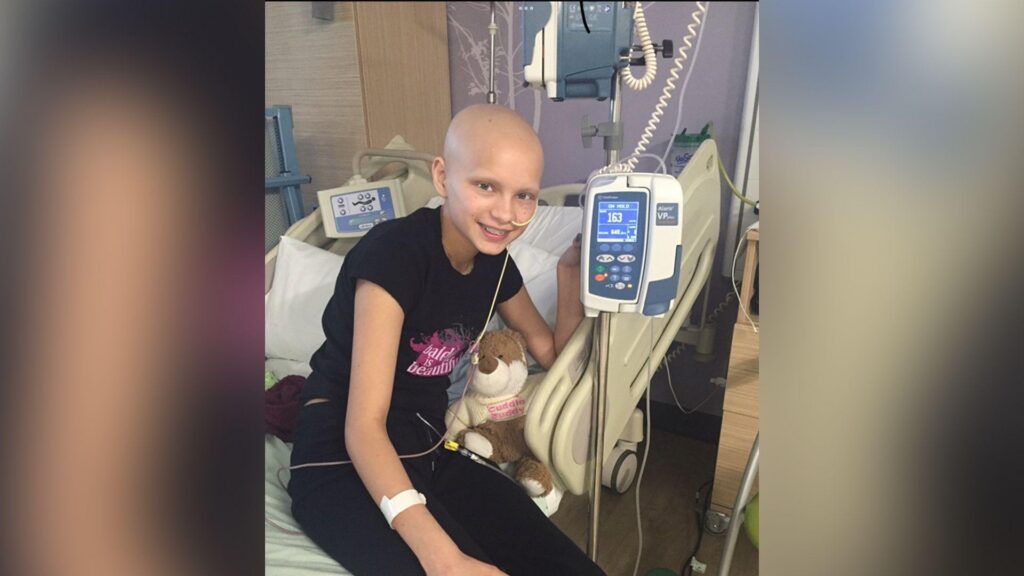
Picture courtesy of Dr Ellie Waters-Barnes: Ellie went through 18 months of cancer treatment, including nine months of intense chemotherapy
Yet Ellie’s story is not defined by cancer. Inspired by the doctors and nurses who cared for her, she made a remarkable decision during her recovery: she would one day join the profession that had helped save her life. Despite the disruption to her education and the long-term effects of treatment, she studied Medicine at Keele University, graduated with distinction and has now begun her career as an NHS Foundation Doctor. Her experience as a former cancer patient gives her an understanding of compassion, resilience and patient care that cannot be taught in textbooks alone.
For families affected by alveolar rhabdomyosarcoma, stories like Ellie’s provide something statistics never can: hope. ARMS remains one of the most aggressive forms of childhood soft tissue cancer and is more likely than other subtypes to spread to the lungs, lymph nodes, bones and bone marrow. Although treatment has advanced considerably over recent decades, children diagnosed with metastatic disease continue to face poorer outcomes than many other childhood cancers. This reality underlines the urgent need for greater investment in research, earlier diagnosis and the development of more targeted, less toxic therapies.
Why Ellie’s Story Matters
Alveolar rhabdomyosarcoma remains one of the greatest challenges in paediatric oncology. Although survival has improved over recent decades, children diagnosed with metastatic disease continue to face significantly poorer outcomes than many other childhood cancers. Encouragingly, advances in genomic profiling, personalised medicine, targeted therapies, immunotherapy and precision cancer vaccines are opening new possibilities that were unimaginable only a few years ago. Continued progress, however, depends on greater awareness, collaboration and sustained investment in research.
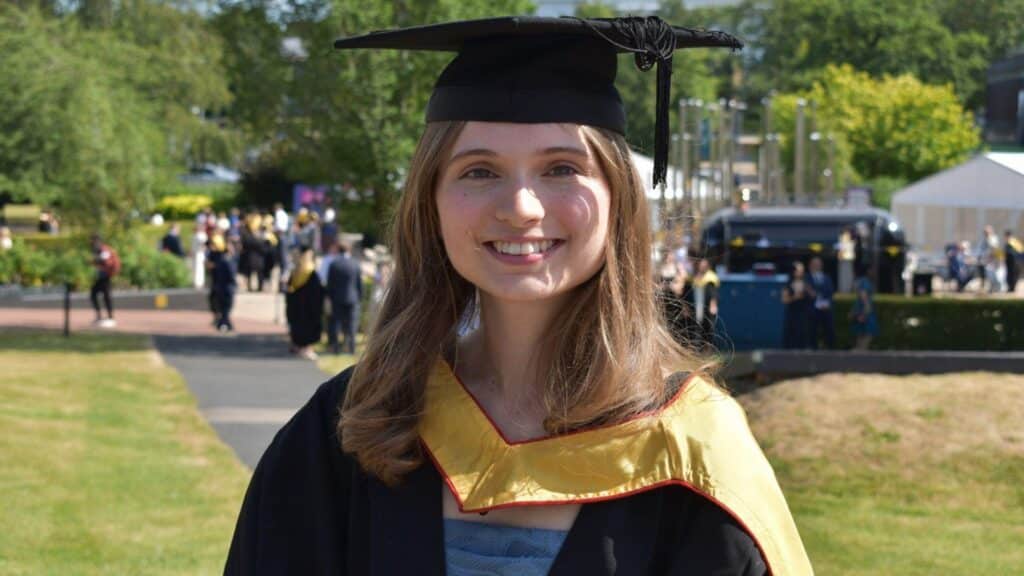
Dr Ellie Waters-Barnes graduates from Keele University before beginning her career as an NHS Foundation Doctor. Photo courtesy of Dr Ellie Waters-Barnes.
Ellie’s journey demonstrates what can be achieved when exceptional clinical care is combined with extraordinary determination. Once a teenager facing overwhelming odds, she is now a doctor caring for patients and giving back to the profession that helped save her life. Her story is a powerful reminder that a diagnosis should never define a child’s future and that every breakthrough in research has the potential to change another family’s story.
At The Harry Kazmi Foundation, we are dedicated to improving outcomes for children and young people affected by alveolar rhabdomyosarcoma. Through raising awareness, championing access to pioneering clinical trials and personalised treatments, and supporting research into more effective and less toxic therapies, we are committed to accelerating progress against one of the rarest and most aggressive childhood cancers.
This Sarcoma Awareness Month, we celebrate not only the scientists, clinicians and researchers working tirelessly to improve survival, but also inspirational survivors like Dr Ellie Waters-Barnes. Her remarkable journey from a 14-year-old diagnosed with Stage 4 alveolar rhabdomyosarcoma to becoming an NHS doctor caring for others is a powerful testament to courage, resilience and the life-changing impact of medical research, innovation and compassionate care.
For every child currently undergoing treatment, and for every family facing the uncertainty of an ARMS diagnosis, Ellie’s story is a reminder that hope is real and that progress is possible. Together, through greater awareness, investment in research and access to innovative treatments, we can help create a future where more children survive alveolar rhabdomyosarcoma and go on to fulfil their dreams, just as Ellie has.
You can help make that future possible. By supporting The Harry Kazmi Foundation, whether through a donation, fundraising, sharing our message or partnering with us, you are helping to fund research, raise awareness and advocate for better treatments for children facing rare cancers. Every contribution brings us one step closer to a world where every young person diagnosed with alveolar rhabdomyosarcoma has the best possible chance not just to survive, but to thrive.
Because every young life deserves a future.