Sarcoma Awareness Month: Raising awareness of rhabdomyosarcoma, its different subtypes, diagnosis, treatment and the hope being created through research.
Every July, Sarcoma Awareness Month shines a spotlight on one of the rarest and least understood groups of cancers. While many people are familiar with cancers such as breast, lung or bowel cancer, relatively few have heard of sarcoma until it affects someone they know. Yet for hundreds of children, teenagers and young adults each year, a sarcoma diagnosis changes life in an instant.
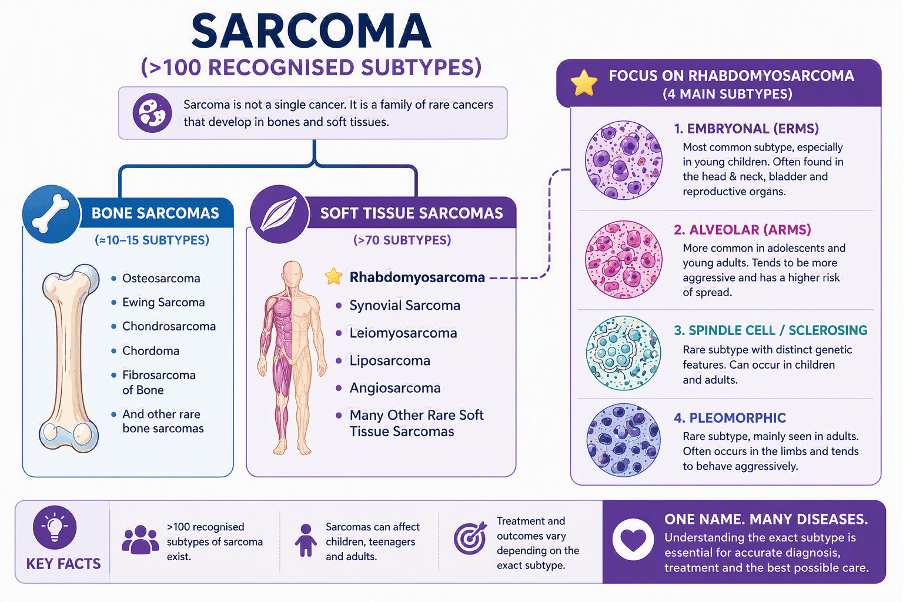
Sarcoma is not a single disease but a group of more than 100 different cancers that develop in the body’s connective tissues, including bone, muscle, fat, blood vessels, nerves and other soft tissues. Although sarcomas account for only around 1% of adult cancers, they represent approximately 15–20% of cancers diagnosed in children and adolescents, making them one of the most significant groups of childhood cancers.
Among these is rhabdomyosarcoma (RMS), the most common soft tissue sarcoma affecting children and young people. Although still rare, rhabdomyosarcoma is an aggressive cancer that requires highly specialised treatment delivered by experienced multidisciplinary teams. During Sarcoma Awareness Month, increasing understanding of diseases such as rhabdomyosarcoma is an important step towards earlier diagnosis, greater public awareness, stronger support for affected families, and continued investment in research.
What is Rhabdomyosarcoma?
Rhabdomyosarcoma is a type of soft tissue sarcoma that develops from immature cells that normally have the potential to become skeletal muscle. Skeletal muscles are responsible for voluntary movement, allowing us to walk, run, smile, breathe and carry out everyday activities. Despite originating from muscle-forming cells, rhabdomyosarcoma can develop almost anywhere in the body, including areas where skeletal muscle is not normally present.
The disease most commonly occurs in the head and neck, arms and legs, bladder and urinary tract, reproductive organs, and the chest or abdominal cavity. It primarily affects children and teenagers but can also occur in young adults and less commonly in older adults.
How common is Rhabdomyosarcoma?
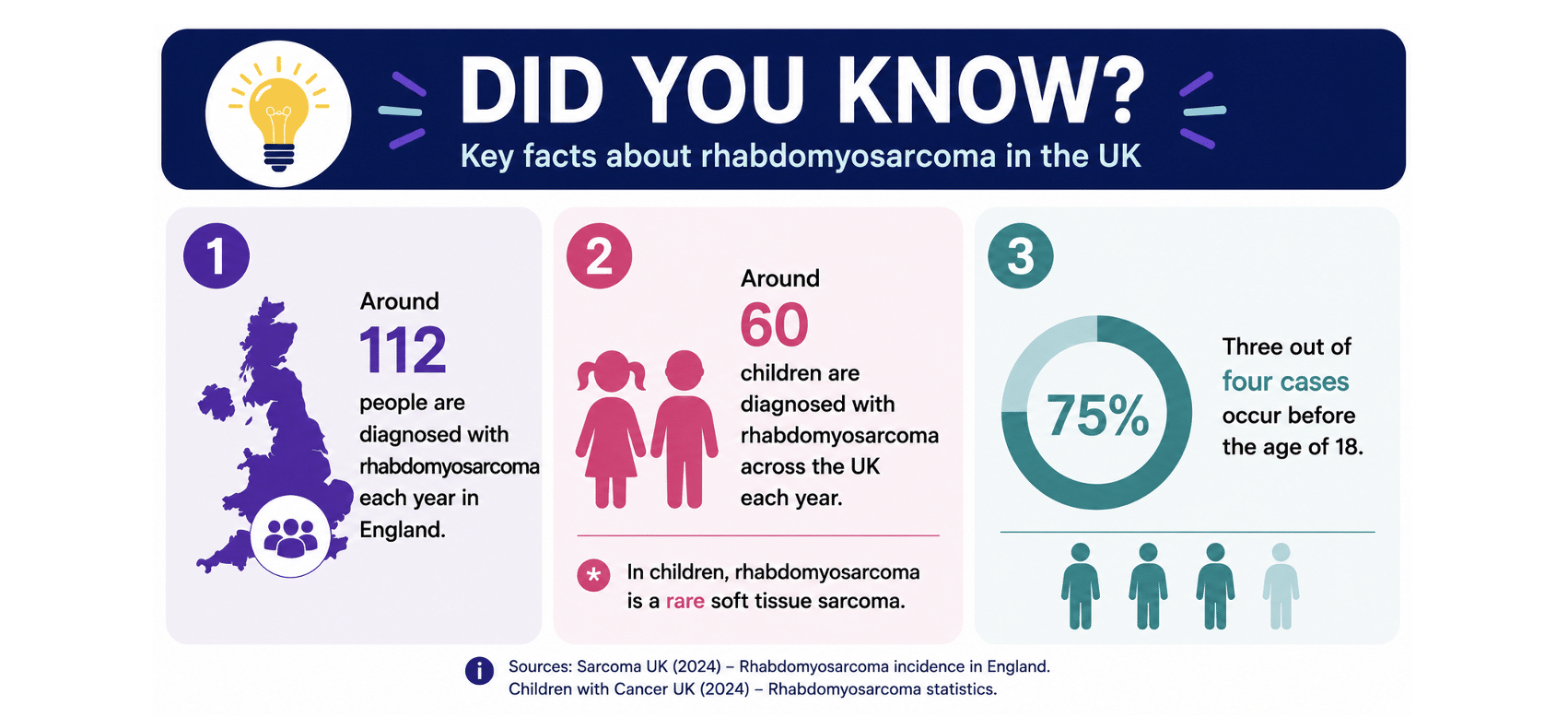
Rhabdomyosarcoma accounts for around half of all soft tissue sarcomas diagnosed in children, making it one of the most important paediatric sarcomas. In the UK, around 60 children and young people are diagnosed each year, while several hundred new cases occur annually in the United States. The disease is most frequently diagnosed in children between two and six years of age, with a second peak during adolescence.
Although rare compared with many adult cancers, rhabdomyosarcoma remains one of the leading soft tissue cancers treated in specialist paediatric oncology centres.
The different types of Rhabdomyosarcoma
Although rhabdomyosarcoma is often referred to as a single disease, it is made up of four recognised subtypes, each with distinct biological behaviour, genetic characteristics, responses to treatment and overall prognosis.
Embryonal Rhabdomyosarcoma (ERMS) is the most common subtype, accounting for around 60–70% of cases. It usually develops in younger children and commonly affects the head and neck, bladder or reproductive organs. It generally responds well to treatment and is associated with more favourable outcomes.
Alveolar Rhabdomyosarcoma (ARMS) is less common but usually more aggressive. It is more frequently diagnosed in adolescents and young adults and often develops in the arms, legs, chest or trunk. Many tumours contain genetic changes known as PAX3–FOXO1 or PAX7–FOXO1 fusion genes, which influence tumour behaviour and prognosis and are becoming increasingly important in the development of targeted therapies and immunotherapies.
Spindle Cell/Sclerosing Rhabdomyosarcoma is a rare subtype whose behaviour varies according to its underlying molecular characteristics, while Pleomorphic rhabdomyosarcoma occurs predominantly in adults and is very uncommon in children.
Recognising these differences allows clinicians to tailor treatment according to the biology of each patient’s tumour, supporting a more personalised approach to care.
The four types of Rhabdomyosarcoma
| Subtype | Most Common Age | Common Locations | Characteristics |
| Embryonal (ERMS) | Young children | Head & neck, bladder, reproductive organs | Most common, generally better prognosis |
| Alveolar (ARMS) | Teenagers & young adults | Arms, legs, chest, trunk | More aggressive, often PAX3–FOXO1 or PAX7–FOXO1 fusion-positive |
| Spindle Cell / Sclerosing | Children & adults | Variable | Behaviour depends on molecular subtype |
| Pleomorphic | Adults | Limbs | Rare in children, aggressive |
What Causes Rhabdomyosarcoma?
The exact cause of rhabdomyosarcoma remains unknown in most children and young people. Like many cancers, it develops when genetic alterations occur within immature muscle-forming cells, disrupting the normal processes that regulate cell growth and division. As these cells continue to multiply uncontrollably, they can form a tumour.
For most patients, these genetic changes arise spontaneously during a person’s lifetime and are not inherited from their parents. However, a small proportion of cases are associated with rare inherited genetic conditions that increase the risk of developing certain cancers, including Li-Fraumeni syndrome, Neurofibromatosis Type 1, Beckwith–Wiedemann syndrome, and Costello syndrome.
It is important for families to understand that, in almost all cases, there is nothing they did or did not do that caused their child’s cancer. Currently, there are no known lifestyle or environmental factors that have been shown to prevent rhabdomyosarcoma, and research continues to investigate why these rare tumours develop.
Signs and symptoms
The symptoms of rhabdomyosarcoma vary depending on where the tumour develops. Common signs may include a lump or swelling that continues to grow, persistent pain, swelling around the eye, frequent nosebleeds, blood in the urine, difficulty passing urine, abdominal swelling, difficulty swallowing or reduced movement of an arm or leg.
Because these symptoms can resemble far more common childhood illnesses or sports injuries, diagnosis is sometimes delayed until the tumour becomes larger or symptoms worsen.
How Is Rhabdomyosarcoma diagnosed?
Diagnosing rhabdomyosarcoma involves a combination of clinical assessment, imaging and laboratory investigations. MRI, CT and PET scans help determine the size of the tumour and whether it has spread elsewhere in the body. A biopsy is then performed so specialist pathologists can confirm the diagnosis by examining tumour tissue under the microscope.
Today, diagnosis extends beyond traditional pathology. Modern molecular testing has become an increasingly important part of understanding rhabdomyosarcoma. Techniques including immunohistochemistry, fluorescence in situ hybridisation (FISH), DNA next-generation sequencing (NGS) and RNA sequencing help identify important genetic features, including PAX3–FOXO1 and PAX7–FOXO1 fusion genes. These advances improve diagnostic accuracy, provide valuable prognostic information, and may help determine eligibility for clinical trials and future precision medicine approaches.
Treatment
Treatment is carefully tailored according to the subtype of rhabdomyosarcoma, the tumour’s location, whether the disease has spread, and its molecular characteristics. Most patients receive a combination of chemotherapy, surgery and radiotherapy delivered by a specialist multidisciplinary team.
Alongside established treatments, many children and young people are offered the opportunity to participate in clinical trials evaluating new medicines, targeted therapies and immunotherapies aimed at improving survival while reducing long-term side effects.
Looking towards the future
Outcomes for children with rhabdomyosarcoma have improved significantly over recent decades thanks to advances in chemotherapy, surgery, radiotherapy, supportive care and molecular diagnostics. However, high-risk and metastatic disease continue to present significant challenges, highlighting the urgent need for continued research.
Scientists around the world are developing increasingly personalised treatments, including engineered T-cell therapies, cancer vaccines, targeted medicines and other immunotherapy approaches designed to attack cancer more precisely. Advances in genomic medicine are also helping clinicians better understand why some tumours respond well to treatment while others prove more resistant.
Every new discovery brings hope that future generations of children and young people will benefit from safer, more effective and more personalised treatments.
Final thoughts
Rhabdomyosarcoma may be rare, but for the families affected it becomes the centre of their world. Raising awareness helps more people recognise the signs and symptoms, encourages earlier diagnosis, supports investment in research and brings hope to those facing this difficult disease.
During Sarcoma Awareness Month, we all have an opportunity to help increase understanding of sarcoma and the many young lives it affects. Greater awareness today can contribute to better treatments, improved outcomes and, ultimately, brighter futures for children and young adults diagnosed with rhabdomyosarcoma.
About the Harry Kazmi Foundation
The Harry Kazmi Foundation is committed to raising awareness of sarcoma and other rare childhood and young adult cancers and championing research that will improve treatments and outcomes. By sharing trusted information, amplifying patient voices and advocating for continued scientific innovation, we hope to create a future where every young person diagnosed with cancer has access to the very best care and every family has reason to hope.