Harry’s ongoing journey and the Foundation’s aim to build a searchable, AI-tagged resource that can later include molecular pathways.
At 17, Harry was doing what many teenagers do: studying at college, learning to drive, playing football, gaming, enjoying music and fashion, and spending time with friends. Life looked ordinary until a diagnosis of stage 4 alveolar rhabdomyosarcoma, a rare and aggressive fusion-positive soft-tissue sarcoma, changed everything.
Alveolar rhabdomyosarcoma is uncommon, with approximately 10–30 people diagnosed each year in the UK. It often grows quickly, can be hard to detect early, and frequently involves a rare cell fusion. For Harry and his family, the diagnosis meant entering a world of specialist care, intensive treatment, and uncertainty that few young people or parents are prepared for.
Harry has now completed nine cycles of chemotherapy. He has responded well to treatment, with the tumour reduced in size from 12 cm to 1 cm. The road ahead remains demanding, with intense radiotherapy, possible clinical trials, and further chemotherapy still to come.
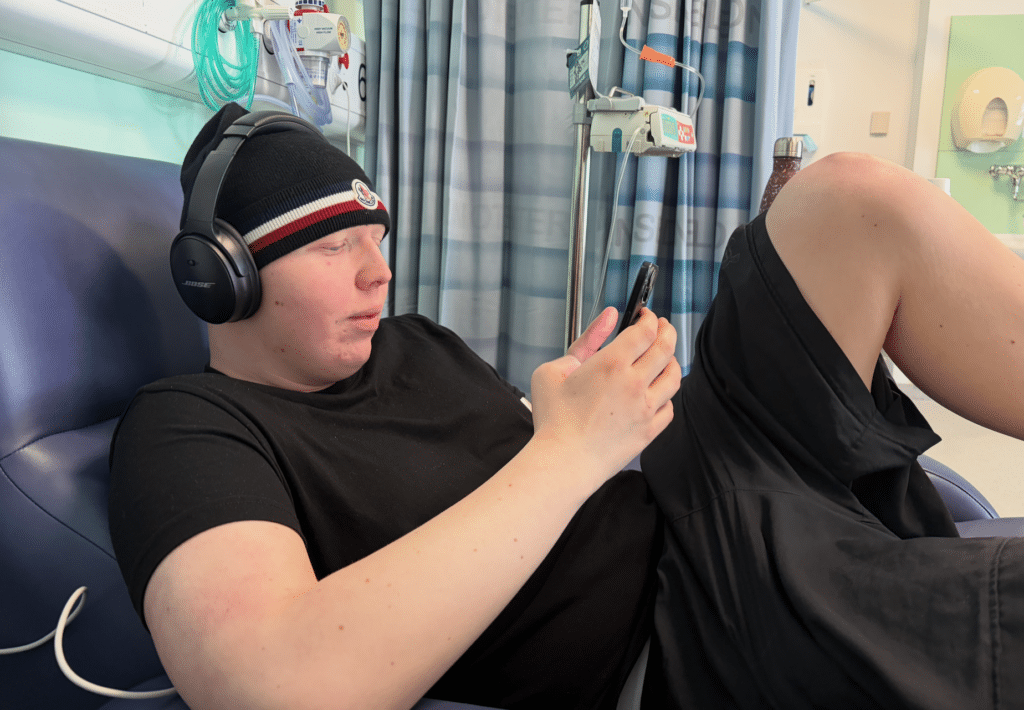
The figures below capture the intensity of Harry’s journey to date. They are not just statistics, they represent long nights on the Teenage Cancer Trust ward, recovery from surgery, cycles of chemotherapy, and the daily resilience required of a teenager and his family.
| Aspect of treatment since March 2026 | Number |
| Total nights spent in hospital | 79 |
| Biopsies | 2 |
| General anaesthetics | 5 |
| Local anaesthetic | 1 |
| Operations | 4 |
| Chemotherapy cycles | 9 |
| Individual chemotherapy treatments | 53 |
| Scans | 8 |
| Blood transfusions | 4 |
| Other Procedures | 5 |
Throughout this, Harry has remained himself, the young man who loves football, gaming, music and time with friends. He has stayed positive even on the hardest days. The foundation was created from this lived experience: to turn personal challenge into wider awareness, research support, and better pathways for other young people facing rare childhood and teenage cancers.
Alveolar rhabdomyosarcoma and other rare sarcomas still receive limited public attention compared with more common cancers. Greater awareness can help with earlier recognition of symptoms, faster referral to specialist centres, and increased investment in research into fusion-positive disease, less toxic therapies, and improved long-term outcomes.
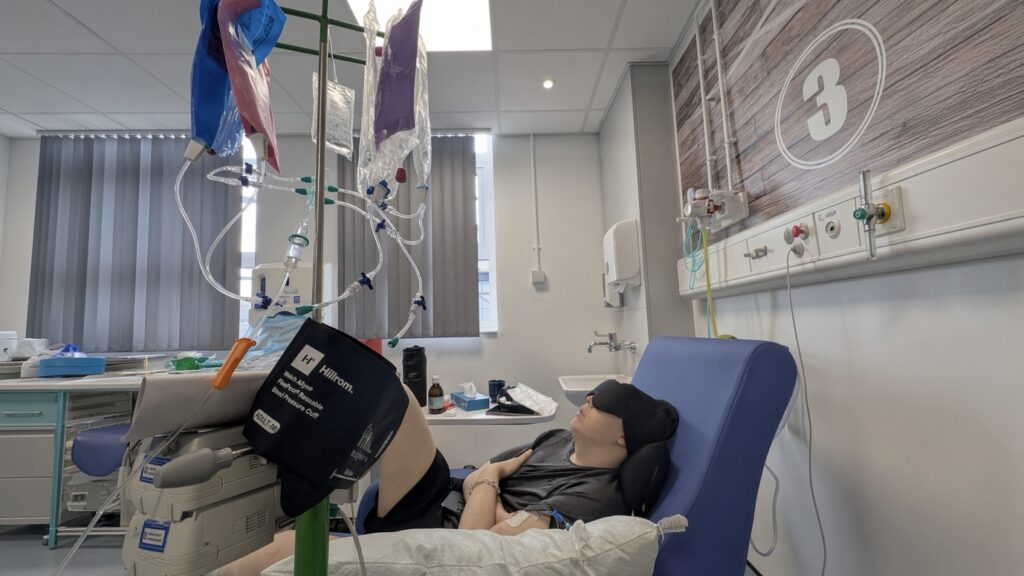
Picture: Harry during Chemotherapy October 2026
Building better tools for research
As part of its mission, the Harry Kazmi Foundation is planning a small, working prototype that collects, AI-tags, and makes searchable the scientific literature on alveolar rhabdomyosarcoma, organised by molecular fusion subtype. The system is designed so that pathways and broader cell-biology literature can be added later without rebuilding the core.
In the longer term, the ambition is for the prototype to support and accelerate research into the molecular pathways that drive fusion-positive alveolar rhabdomyosarcoma. By making the literature easier to navigate and connect, it aims to help researchers, clinicians, and advocates identify patterns, gaps, and opportunities more effectively, ultimately contributing to a deeper understanding of the disease and better-informed research directions.
This early-stage project is intended to help the community navigate the fragmented literature on fusion-positive ARMS more effectively. We are actively seeking partners and funding to move the prototype forward.
Alveolar rhabdomyosarcoma and other rare sarcomas still receive limited public attention compared with more common cancers. Greater awareness can help with earlier recognition of symptoms, faster referral to specialist centres, and increased investment in research into fusion-positive disease, less toxic therapies, and improved long-term outcomes.
How you can help
The Harry Kazmi Foundation works to raise awareness of alveolar rhabdomyosarcoma, support research and collaboration, and advocate for better diagnosis, treatment and care for young people and families. Donations, fundraising, sharing information, or simply talking about rare childhood cancers all make a difference. If you are a researcher, institution, funder, or organisation interested in partnering on the literature prototype (or other alveolar rhabdomyosarcoma-focused work), we would be glad to hear from you.
Harry’s story is still being written. Behind every set of treatment numbers is a teenager with a future worth fighting for and a family determined that other families facing the same diagnosis will have more knowledge, more options and more hope.
Learn more or support the work at www.hkfoundation.org.uk.