Article by Amelia Hughes, Student Volunteer, The Harry Kazmi Foundation
Looking beyond the numbers to understand the impact on children, young adults and their families.
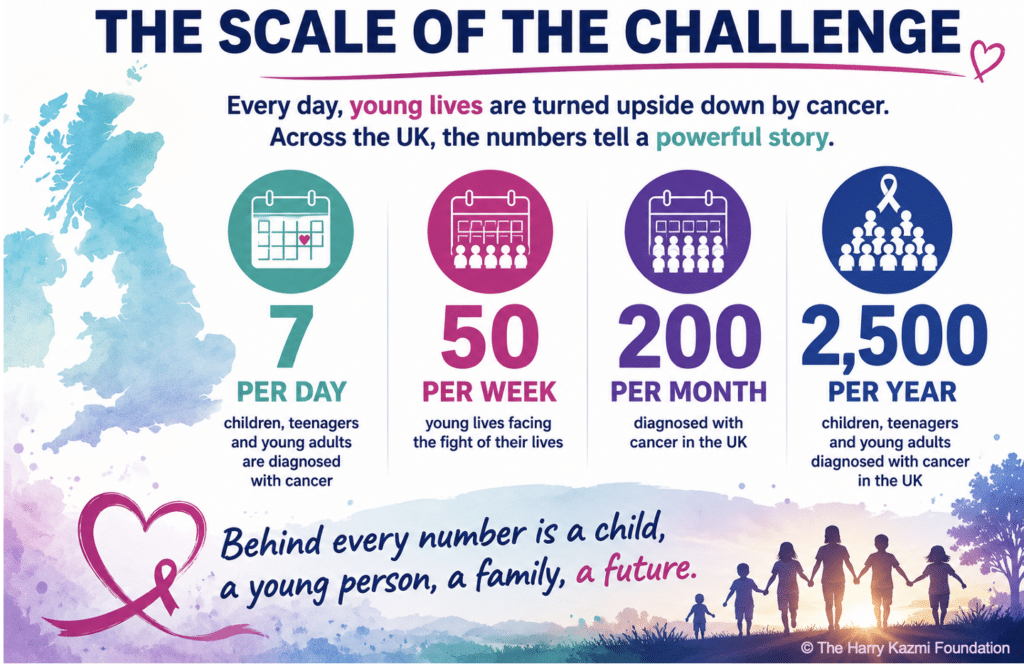
Every day in the UK, seven young people aged between 13 and 24 hear the words, “You have cancer.” It is a statistic frequently quoted by charities, healthcare professionals and policymakers, yet behind this simple number lies a much larger story. While public attention often focuses on cancer in older adults, thousands of children, teenagers and young adults are diagnosed every year, facing challenges that can affect every aspect of their lives, from education and friendships to careers, independence and future aspirations.
At first glance, seven diagnoses a day may not seem significant in a nation of almost 70 million people. However, when viewed over time, the scale of the challenge becomes much clearer. Seven diagnoses each day equates to almost 50 young people every week, more than 200 every month and approximately 2,500 teenagers and young adults diagnosed with cancer every year across the United Kingdom. Over a five-year period, more than 12,000 young people and their families will face the life-changing reality of a cancer diagnosis.
While cancer remains far more common in older adults, evidence shows that the incidence of cancer among children, teenagers and young adults has increased over the longer term. Advances in diagnostic technologies and greater awareness have undoubtedly contributed to improved detection, but researchers continue to investigate why certain cancers appear to be increasing in younger populations. Understanding these trends is critical, not only for improving prevention and diagnosis but also for ensuring healthcare systems are equipped to meet future needs.
One of the challenges in discussing cancer among young people is that it is not a single disease. The cancers affecting children, teenagers and young adults are often very different from those seen in older adults. While cancers such as lung, bowel and prostate cancer dominate adult cancer statistics, younger people are more commonly affected by leukaemia’s, lymphomas, brain tumours, germ cell tumours, bone cancers and soft tissue sarcomas. Many of these cancers develop through complex biological and genetic mechanisms that remain only partially understood.
Leukaemia remains one of the most common cancers affecting children and young people, while lymphomas, particularly Hodgkin lymphoma, account for a significant proportion of diagnoses during adolescence and early adulthood. Brain and central nervous system tumours continue to present major clinical challenges due to their location and complexity. Bone cancers such as osteosarcoma and Ewing sarcoma often affect teenagers during periods of rapid growth, while soft tissue sarcomas, including rhabdomyosarcoma, can occur throughout childhood and adolescence. In addition, germ cell tumours, thyroid cancers and melanomas contribute to the diverse range of cancers affecting this age group.
Unlike many adult cancers, lifestyle factors such as smoking and long-term environmental exposures are often less relevant in young people. This means that many diagnoses arrive without warning, affecting individuals who may otherwise appear healthy and active. For families, the diagnosis often comes as a profound shock, disrupting lives that only days earlier may have seemed entirely normal.
Despite these challenges, there is genuine reason for optimism. Over the past four decades, significant advances in cancer treatment have transformed outcomes for many young people. Improvements in chemotherapy, radiotherapy, surgery, imaging technologies, innovation and supportive care have helped drive substantial increases in survival rates. Today, approximately 87% of teenagers and young adults diagnosed with cancer survive for at least five years following diagnosis. This represents one of the great success stories of modern medicine and reflects the dedication of researchers, clinicians, nurses, charities and patient communities working together to improve outcomes.
However, survival statistics only tell part of the story. Many young people experience long-term physical and psychological effects resulting from both their cancer and its treatment. Late effects can include fertility challenges, cardiovascular complications, secondary cancers, fatigue and mental health difficulties. As survival rates improve, increasing attention is being given to helping survivors live healthy, fulfilling lives beyond their diagnosis.
While overall progress has been encouraging, improvements have not been experienced equally across all cancer types. Some rare and aggressive cancers continue to have significantly poorer outcomes than more common forms of childhood cancer. This is particularly true for certain sarcomas, high-risk brain tumours and relapsed cancers, where treatment options can be limited and research funding relatively scarce.
One such example is Alveolar Rhabdomyosarcoma (ARMS), a rare and aggressive soft tissue sarcoma that primarily affects children, teenagers and young adults. Although ARMS accounts for only a small proportion of overall cancer diagnoses, its impact on affected families is profound. The disease is often associated with aggressive behaviour, a higher likelihood of metastatic spread and a greater risk of recurrence than some other childhood cancers. For families facing an ARMS diagnosis, the rarity of the disease can create additional challenges, including limited awareness, fewer specialist research programmes and fewer opportunities to participate in clinical trials.
The difficulties faced by families affected by rare cancers highlight a broader issue within cancer research. Research funding often reflects the number of patients affected by a particular disease, meaning rarer cancers can struggle to attract the same level of investment as more common conditions. Yet for the young people and families affected, rarity does not reduce the urgency of finding better treatments. Every diagnosis represents a life interrupted, and a future placed under threat.
This is why continued investment in research is so important. The remarkable improvements seen in childhood leukaemia over recent decades demonstrate what can be achieved when scientific discovery, clinical expertise and sustained funding come together. Emerging fields such as genomics, precision medicine and immunotherapy are already transforming cancer care and offer genuine hope for the future. Researchers are increasingly able to identify the specific genetic drivers of individual cancers, enabling more personalised treatment approaches and opening the door to therapies that were unimaginable only a generation ago.
At the same time, healthcare systems face growing pressures as overall cancer diagnoses continue to rise. Across the UK, more than 400,000 people are diagnosed with cancer every year, and projections suggest these numbers will continue to increase over the coming decades. Some analyses indicate that by 2030 the number of teenagers and young adults diagnosed with cancer each day could move closer to ten. While advances in treatment provide hope, the growing demand for services reinforces the importance of investing in research, specialist care and support programmes today.
Yet statistics alone can never fully capture the reality of cancer. Numbers help us understand trends, identify challenges and allocate resources, but they cannot convey the experience of sitting beside a hospital bed, waiting for scan results or watching a young person navigate months of treatment. They cannot measure the impact on education, friendships, employment or mental wellbeing. Nor can they adequately reflect the resilience, courage and determination shown by so many young people and their families throughout their cancer journey.
Behind every diagnosis is a young person with ambitions, talents and dreams for the future. Behind every diagnosis is a family adapting to a reality they never expected to face. Behind every diagnosis is a story that deserves to be heard. The seven young people diagnosed today will not simply become statistics. They will become patients, survivors, advocates and, in many cases, sources of inspiration to those around them. Their experiences will help shape future research, improve understanding and drive progress for generations to come.
At the heart of the Harry Kazmi Foundation is Harry’s vision: that every young person facing cancer should have access to hope, support and the best possible chance of a brighter future. By championing awareness, accelerating research and supporting families, we aim to help create a world where fewer young lives are disrupted by cancer and more young people can fulfil their potential.
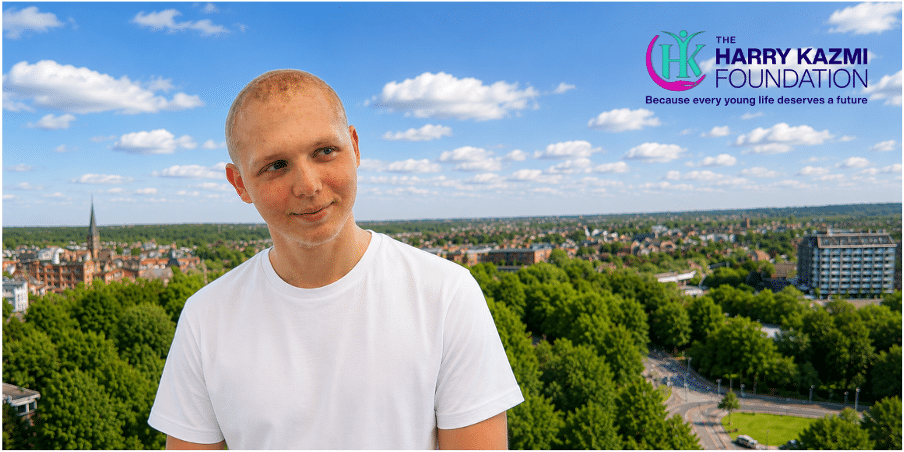
Photo: Harry Kazmi, the inspiration behind The Foundation’s commitment to support young people affected by cancer.
Because behind every statistic is a person.
Behind every number is a family.
And every young life deserves a future.